
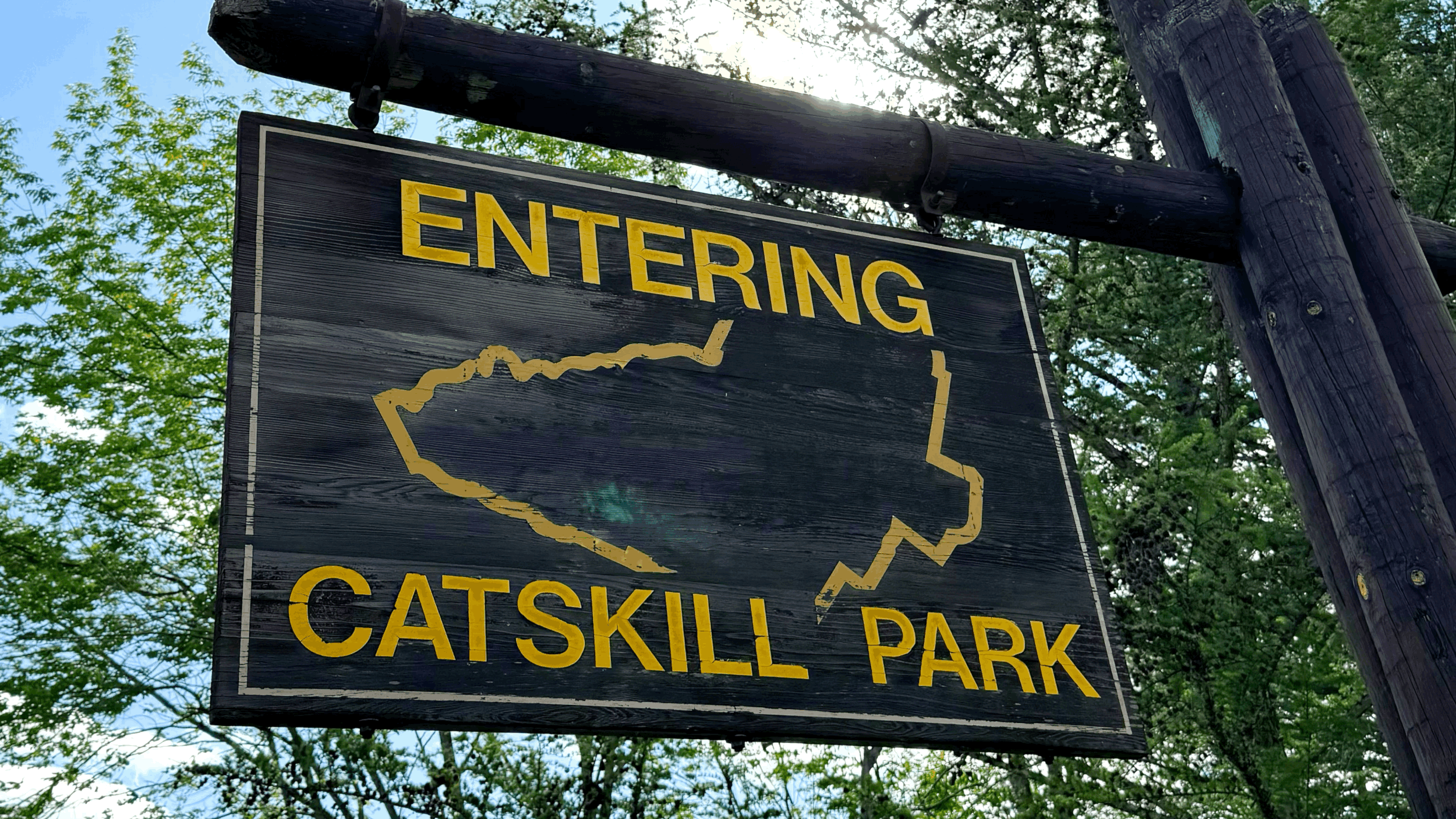
The Catskill and Adirondack Forest Preserves are New York’s promise to keep some of our most extraordinary lands truly wild, for everyone and forever. But “forever wild” does not manage itself in an era of record visitation, climate change, and limited local resources.
When the Catskill Strategic Planning Advisory Group (CAG) released its final report, it delivered a clear message: if the Catskill Park is going to stay wild, welcoming, and safe, it must be managed as one park, with active tools that match today’s realities. The report recognized that while the Catskills are divided among many agencies and jurisdictions on paper, visitors experience one park and communities acutely feel the cumulative impact of fragmented management.
To address that gap, the CAG laid out six big themes: manage the Catskill Park as a single, cohesive system; keep natural resources at the center of every decision; invest in better marketing, communication, and education; tackle traffic and parking with real infrastructure and planning; ensure the park benefits communities; and embed inclusion in how the park is managed and experienced. In short, the report calls for moving beyond one‑off fixes toward coordinated, science‑based management that can respond to high use, climate change, and the evolving needs of Catskills residents and visitors.
Visitor Use Management (VUM) planning in the trailless peaks and now in Kaaterskill Clove is one way the Department of Environmental Conservation (DEC) has begun to put these recommendations into practice. These VUM projects use data, clear desired conditions, and ongoing monitoring to focus on visitor safety, resource protection, and better experiences, and they come with specific actions and a plan to adapt management over time. This is exactly the kind of active, adaptive management the CAG envisioned for high‑use areas across the park.
How the Catskill Center is Advancing Whole‑Park, Active Management
The Catskill Center has been deeply involved in this shift, advocating for it in Albany and DEC meetings, and modeling it on the ground at its own properties. As a leader in Catskill Park advocacy and a co-founder of the Catskill Park and Forest Preserve coalitions, the Catskill Center has consistently advocated for whole‑park planning and structured visitor use management in the park’s highest‑use areas.
Through long‑term advocacy, the Catskill Center helped spur the creation of the CAG, supported its emphasis on whole‑park management and sustainable recreation, and continues to press New York State to follow through on those recommendations. The Center’s comments on the Kaaterskill Clove VUM work explicitly link that effort to the CAG’s call for more active management of high‑use areas.
As co‑chair of the Catskill Park Coalition and Forest Preserve Coalition, the Catskill Center has pushed for dedicated Forest Preserve stewardship funding, expanded trail contracts, more stewards, and investments in key corridors – practical building blocks for the kind of park‑wide management the CAG describes. Those efforts helped secure more than $46 million in Forest Preserve stewardship funding since the line was created, including $10 million in 2026 alone.
The Catskill Park Advisory Committee, which the Catskill Center established and continues to convene, now gives local governments, agencies, and organizations a regular table for exactly the kind of coordination the CAG says the Catskills needs. That forum is helping shift conversations from reactive, site‑by‑site responses to shared priorities and joint action.
Putting Active Management into Practice at Key Sites
At the same time, the Catskill Center is putting active, adaptive management into practice at its own “anchor amenities”: Platte Clove Preserve, Thorn Preserve, and the Catskills Visitor Center.
At Platte Clove Preserve, the Center is moving from simply keeping the gate open to a full, data‑informed strategy: a safer parking and trailhead concept, trail stabilization, clearer safety messaging at waterfalls and steep slopes, and a stronger steward presence to educate visitors and reduce impacts. These projects respond directly to rising use and safety issues, and mirror the kinds of tools VUM recommends for high‑use areas on the Forest Preserve.
At Thorn Preserve, the Center is actively managing grasslands, wetlands, and riparian areas for wildlife and climate resilience, while using policies like a dog‑free rule and improved visitor education to protect sensitive species and habitats. Programs such as CRISP’s “Save the Hemlocks” and the apiary at Thorn show visitors how science‑based management can protect forests, pollinators, and water quality.
At the Catskills Visitor Center, the Center is using visitor data and surveys to guide new exhibits, trail improvements, and stronger messaging on responsible recreation. Recent planning work shows visitation steadily rising, but also highlights how few visitors stay overnight nearby, underscoring the need for better trail‑to‑town connections, transportation, and marketing that support communities while protecting resources.
In all of this work, the Catskill Center is helping to actualize the CAG’s vision: active, adaptive management; better coordination; stronger education; and a clear focus on both natural resource protection and community benefit.
Why This Matters Now
More people are exploring the Catskills than ever before, but the park’s historic roads, trailheads, and parking lots were never designed for today’s levels of use. Without intentional, whole‑park management, the result is overcrowding, unsafe roadside parking, damaged trails, degraded natural resources, and communities struggling with traffic and housing pressure.
The CAG has given the Catskills a framework; now it needs consistent investment and follow‑through. That means funding Catskill Stewards and DEC Forest Rangers, trail crews and park planners, VUM studies and monitoring, Catskills Visitor Center expansion, and local transit,along with building the capacity of organizations like the Catskill Center to plan, convene, and keep pushing for a better path forward.
Help Make Whole‑Park Management Real
The Catskills need more than admiration, they need champions who will do the long, steady work of turning the CAG’s recommendations into reality on the ground. The Catskill Center is committed to that work: advocating for whole‑park management in Albany and with DEC, implementing active management on its own lands, and helping communities and agencies pull in the same direction.
You can help by supporting the Catskill Center’s advocacy and stewardship with a gift or membership, which strengthens the organization’s ability to convene partners and implement on‑the‑ground solutions. You can also stay informed about the CAG recommendations, VUM projects, and other active‑management efforts, and speak up to New York State leaders,asking them to invest in the Catskill Park, expand professional stewardship and planning, and fully embrace whole‑park management.
With strong partners and sustained investment, the Catskill Park can be managed as the connected, living landscape it truly is; a place where trails, towns, forests, and communities are cared for as part of one shared future. If we dream big for what this park can be and follow through together, we can keep the Catskills, safe, and welcoming for generations to come.
