
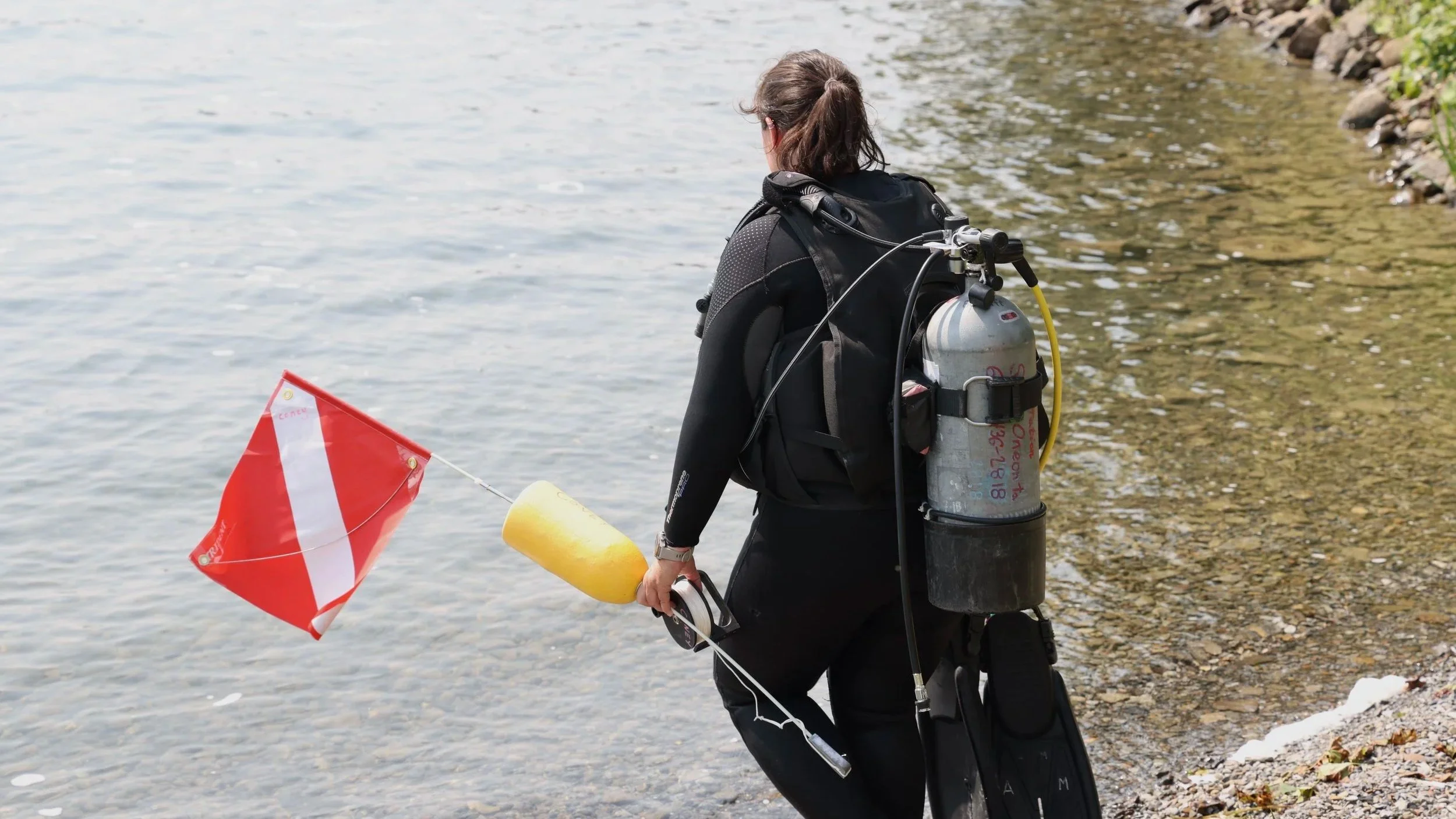
On a recent dive beneath the surface of Otsego Lake, Catskill Regional Invasive Species Partnership (CRISP) Aquatic Invasive Species Manager Sarah Coney was looking for something we would generally rather not find: quagga mussels.
But on this particular day, finding invasive freshwater mussels was the point. Sarah, whose open water dive training allows her to conduct underwater fieldwork for CRISP, had been asked to collect quagga mussels by researchers working to improve how invasive species are detected across New York State.
It was a relatively small task within a much larger effort, but a clear example of how effective invasive species work relies on collaboration across regions and watersheds.
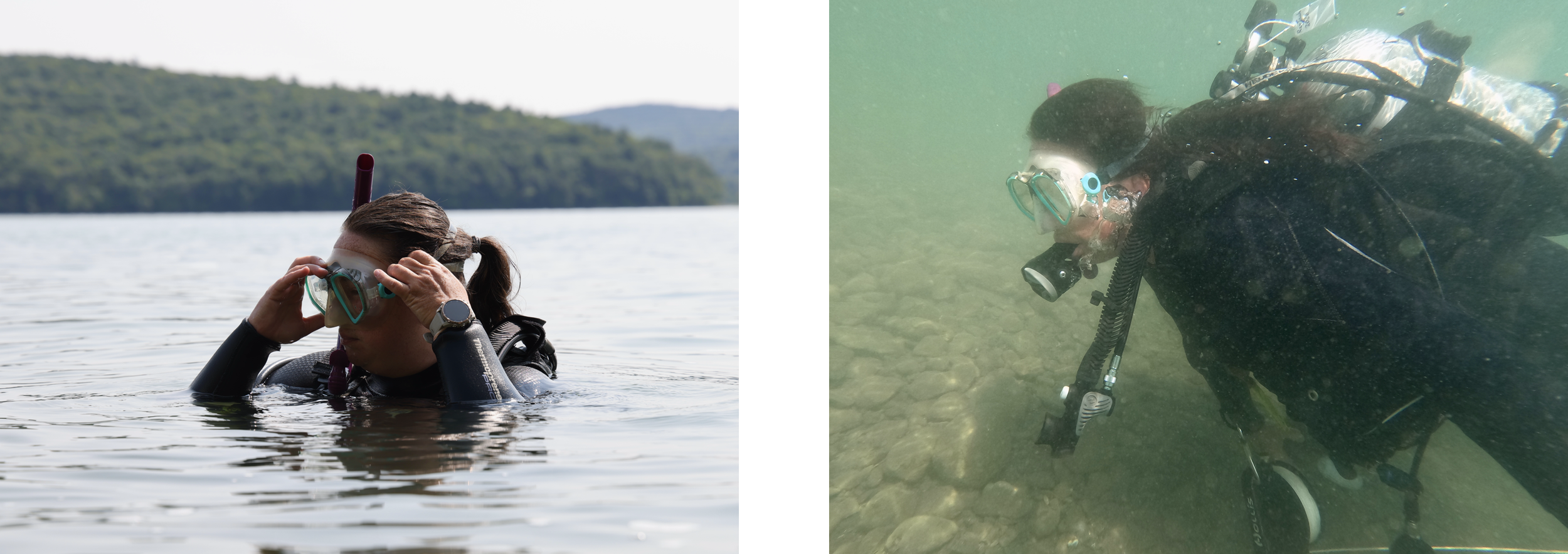
New York is divided among eight Partnerships for Regional Invasive Species Management, better known as PRISMs. Each focuses on the invasive species challenges facing its region while contributing to a statewide effort to prevent, detect, monitor, and manage their spread.
CRISP, a program administered by the Catskill Center, covers large portions of the Susquehanna, Delaware, Schoharie, and Esopus watersheds in New York. Our staff work across forests, wetlands, lakes, streams, and other habitats throughout the region. But invasive species do not recognize PRISM boundaries, making collaboration essential.
The quagga mussels Sarah collected, and later dissected, were destined for Albany as part of a joint research project between the Center for Functional Genomics at the University at Albany and the New York State Department of Environmental Conservation. The project is developing improved methods for detecting high-priority invasive species identified by partners including the Capital Region PRISM and Adirondack Park Invasive Plant Program.
In other words, mussels collected in the CRISP region could help improve invasive species detection well beyond it. And at the heart of this project is DNA.
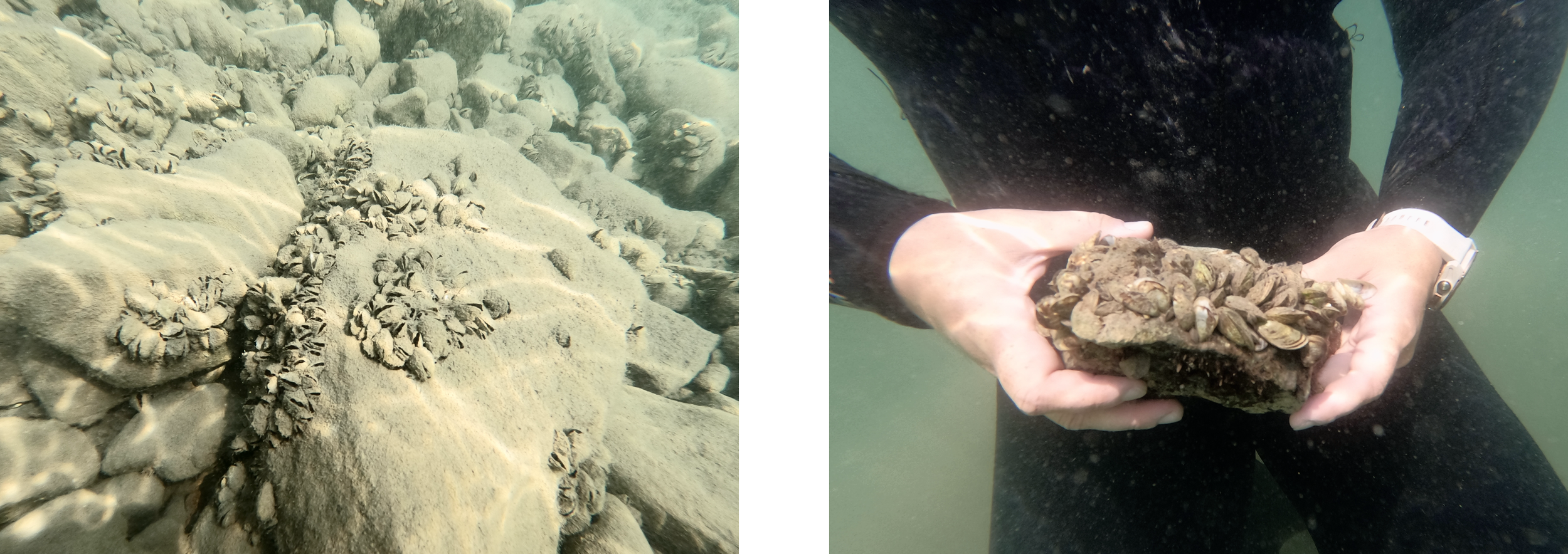
Researchers are using Oxford Nanopore long-read DNA sequencing to develop better genetic information for priority invasive species, including quagga mussels. Using specimens like those collected and processed by Sarah, researchers can build the genetic information needed to develop more sensitive qPCR assays, tests designed to detect the genetic material of a particular species.
That can be especially valuable for early detection. Traditional surveys depend on direct encounters with an organism, something that can prove difficult when a population is small, dispersed, underwater, or otherwise hard to observe. Genetic tools offer another way to detect what traditional surveys might miss.
The Catskill Center is beginning to put similar tools to work in our own region. Our staff recently began collecting environmental DNA (eDNA) in the Upper Susquehanna watershed with support from the Chesapeake WILD grant program funded primarily by the U.S. Fish & Wildlife Service and administered in partnership with the National Fish and Wildlife Foundation. Instead of searching for an organism itself, eDNA sampling looks for traces of genetic material that organisms leave behind in their environment.
A water sample can then provide clues about which species are present, including those that might be harmful to the ecosystem and otherwise difficult to find.
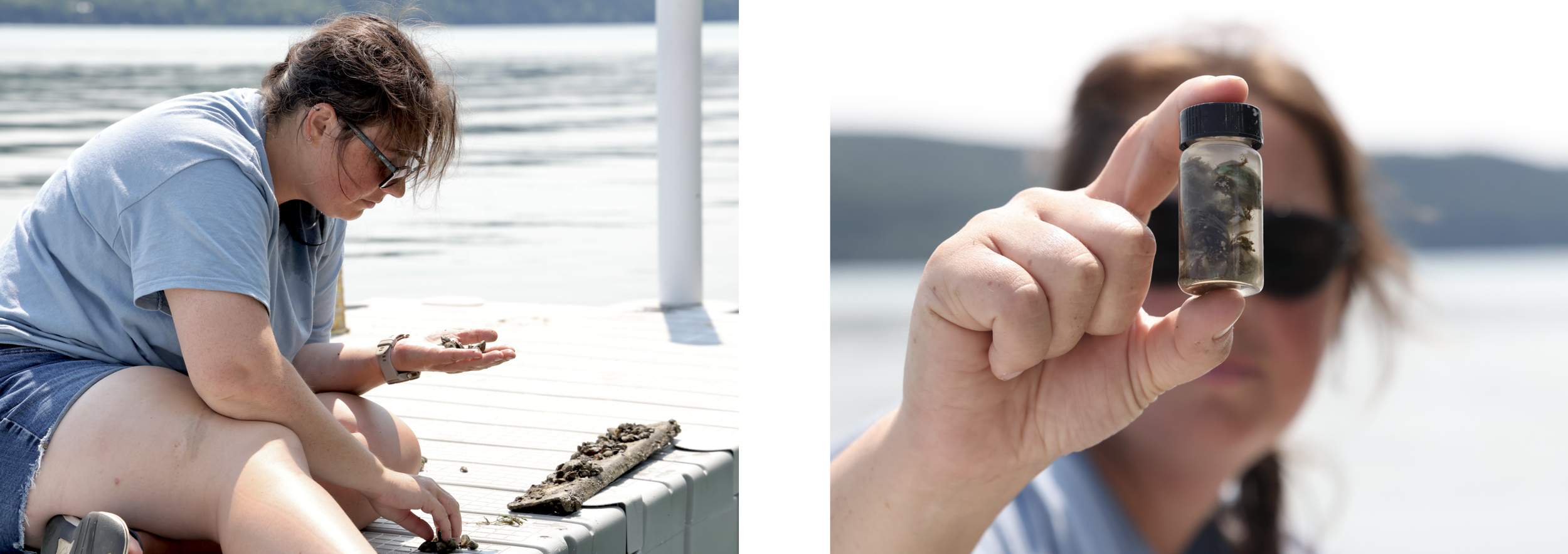
From a quagga mussel collected in Otsego Lake to traces of DNA found in an Upper Susquehanna water sample, each piece of data adds to a larger picture of what is living, and changing, in New York’s waters.
That shared knowledge is one of the strengths of New York’s PRISM system. Invasive species don’t stop at regional boundaries, and neither does the work to understand and manage them. For CRISP, that means keeping a close watch on the Catskills while contributing our skills, data, and discoveries to a statewide effort to do the same.
Learn more about CRISP and how we’re working to detect, monitor, and manage invasive species across the region at catskillinvasives.com.
