
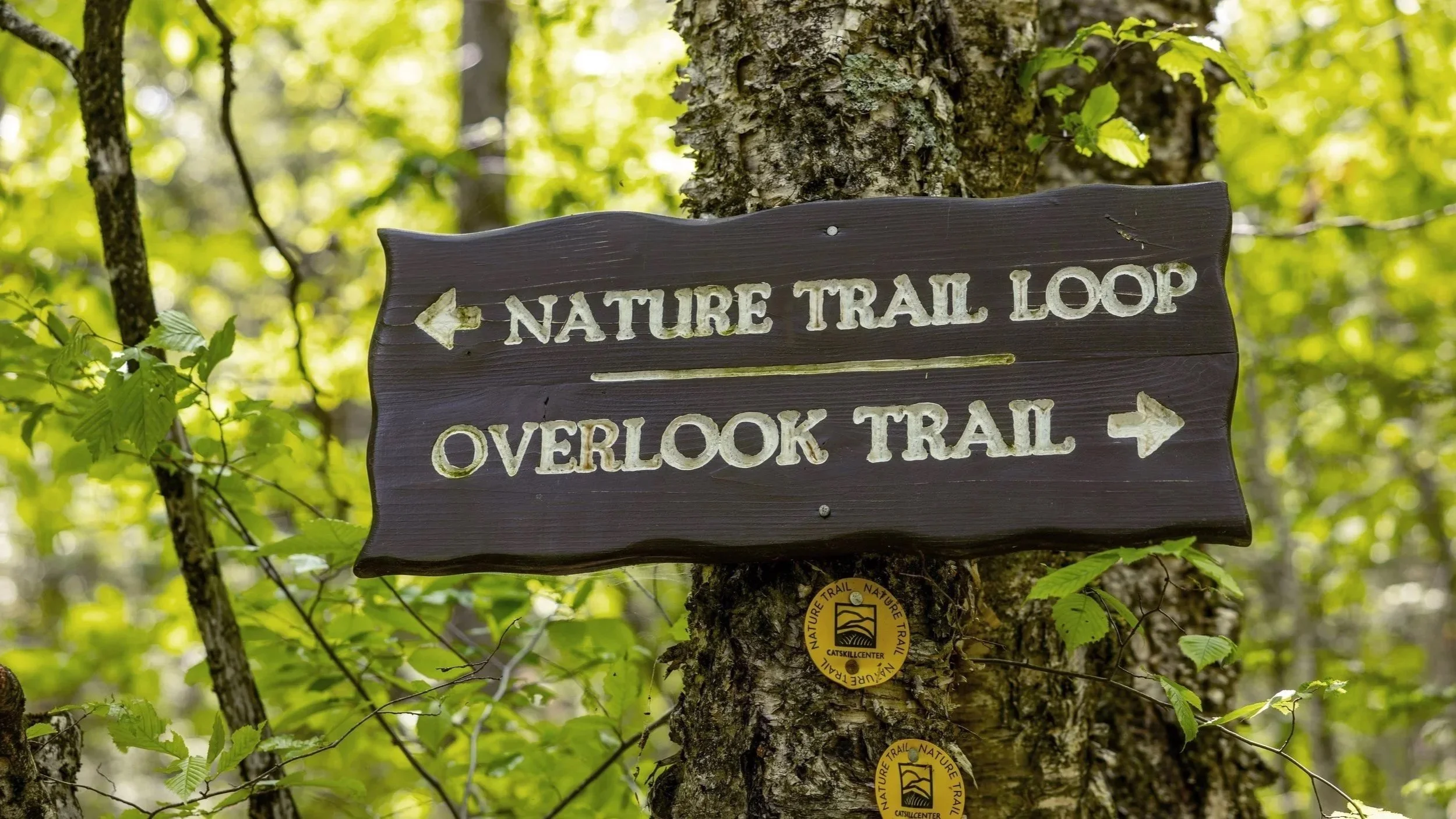
The Catskill Center’s lands—the places we own, protect, and manage as part of our role as an accredited land trust—are where our mission meets the real world. They’re also where we can show, at specific places people care about, the kind of thoughtful, active management we keep calling for across the Catskill Park and Forest Preserve.
Three Places, Three Key Goals
With support from New York State, we recently finished a study for our three core Catskill Center properties: the Platte Clove Preserve in Hunter, the Thorn Preserve in Woodstock, and the Congressman Maurice D. Hinchey Catskills Visitor Center in Shandaken.
The objective was straightforward: look at these places with fresh eyes and ask how they can best protect our lands and waters, support nearby communities, and deepen people’s connection to the Catskills.
When you look beyond the charts and renderings, three primary needs stand out:
At Platte Clove Preserve, we need to thoughtfully manage increasing use and public safety;
At the Thorn Preserve, we need to support and improve habitat while adding functional work and gathering spaces within existing buildings; and
At the Catskills Visitor Center, we need to welcome more people in meaningful ways that deepen their connection to the Catskill Park and inspire greater stewardship.
Those aren’t new ideas for us. They’re the same themes we bring to Albany every year: safer public access, conservation, stewardship, and making sure the Catskills have the infrastructure and funding to support those goals.
From Ideas to Decisions
The amenities study is aspirational by design. It was meant to put options on the table and help us see new possibilities, not to serve as a punch list.
The real work now is slower and more practical. Over time, we’ll go back through the study, take a close look at each property, and decide which ideas are worth advancing through our property management planning process. Some ideas will move forward. Some will get set aside. Many will be reshaped as we learn more.
In doing that, we’ll be guided by a few steady principles:
Fix the things that clearly aren’t working, especially where public safety and natural resource protection are at stake;
Focus on improvements that genuinely help visitors and nearby communities, while protecting what makes the Catskills unique; and
Make sure anything we advance fits our mission, the character of the place, and the legal and conservation commitments already in place.
As we work through those questions, we’ll stay in conversation with staff, partners, and, where appropriate, the public. We’re not rushing. We’re taking the time to get this right.
Practicing What We Advocate
For a long time, the Catskill Center has asserted that high-use areas in the Catskills need more comprehensive consideration than either neglect or heavy-handed restriction.
They need practical, place-based management that protects the land and helps people have safe, enjoyable experiences.
Our own lands give us a chance to demonstrate what we mean. By treating Platte Clove, Thorn, and the Catskills Visitor Center as examples of careful, mission-driven management, and by being open about where we stand in the process of deciding what to do, and when, we strengthen every recommendation we make for the Forest Preserve.
We’re not just asking for change elsewhere; we’re taking responsibility in our own backyard. We know these places matter to a lot of people, including all of us on staff and on the board, our partners at these sites, and the public. That’s one reason we’re approaching this work with both care and pragmatism: testing ideas against our mission, looking closely at benefits and trade-offs, and adjusting as we go.
All of this “behind the scenes” work has a direct bearing on how we show up for the Catskill Park.
When we ask New York State to invest in trails, visitor centers, active management, science, infrastructure, and stewardship, it matters that we’re executing the same kind of consideration and investment on our own sites.
This is the heart of the connection between our land trust work and our advocacy. The choices we make on our own properties help shape the future of the Catskill Park, and they give us grounded stories we can bring into every conversation about funding, policy, and the long-term health of this place we all share.
We Need You
Careful planning and thoughtful implementation require time and financial support. We need to care for our own lands thoughtfully and well, and maintain a strong voice in Albany pushing for the broader active management the Catskill Park needs. If you believe in that work, we hope you’ll consider making a gift to the Catskill Center. Your support helps us protect and manage these special places, strengthen stewardship on the ground, and advocate for the long-term investment the Catskills deserve.
